

“What we find changes who we become.” -Peter Morville
WHAT IS RESEARCH?
Research is a detailed study of a subject, especially in order to discover new information or reach a new understanding. In AP Research, we will be exploring what original research is and how it is conducted within different disciplines of study.
“Research is creating new knowledge.” -Neil Armstrong
INTRODUCTION:
Content Overview: Advanced Placement (AP) Research allows students to deeply explore an academic topic, problem, or issue of individual interest. Through this exploration, students design, plan and conduct a year-long-research-based investigation to address a research question. In the AP Research course, students further their skills acquired in accessing, analyzing, and synthesizing information as they address a research question. Students explore their skill development, document their processes, and curate the artifacts of the development of their scholarly work in a portfolio. The course culminates in an academic paper of approximately 4000-5000 words (accompanied by a performance or exhibition of product where applicable) and a presentation with an oral defense.
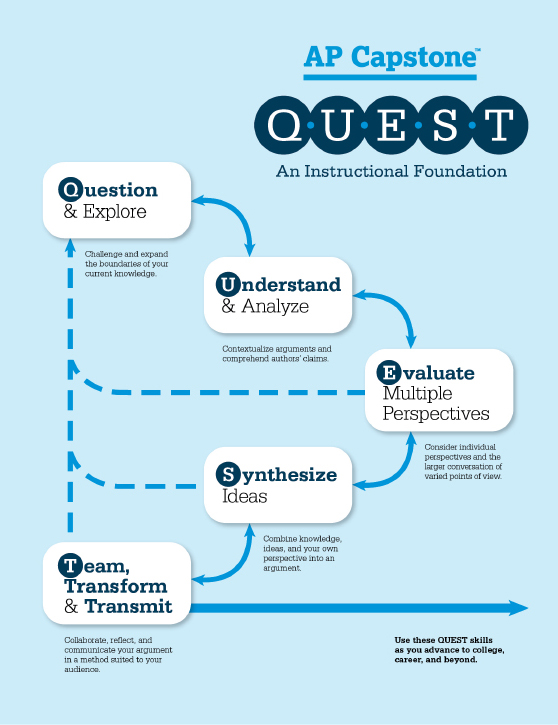
AP Research is not tied to a specific content area, rather it emphasizes and strives for competency in core academic skills. Students gain Essential Knowledge (“What students will know…”) and develop and apply discrete skills identified in the Learning Objectives (“What students will demonstrate…”) of the Enduring Understandings (“What students will remember in the long term…”) within the five big ideas represented by the acronym QUEST introduced in the prerequisite AP Seminar course.
❖ Question and Explore: Read critically; pose questions and identify issues that compel you to want to explore further.
❖ Understand and Analyze: Use specific tools – such as re-reading, questioning in text, and considering multiple perspectives – to break down an idea or argument into parts that make sense to you.
❖ Evaluate Multiple Perspectives: Identify a variety of perspectives, viewpoints, and/or arguments of an issue and consider any bias to determine the validity of that point of view.
❖ Synthesize Ideas: Create new perspectives after evaluating other varying perspectives and establishing a unique position or claim using a variety of resources designed for a specific audience.
❖ Team, Transform, and Transmit: Communicate the message clearly and effectively so as to transform both participants and the audience.
Requirements for Success In This Course:
- Communication (Google Classroom/Email): Checking emails at least once on a daily basis will be an expectation of the course in order to stay on top of class communications. Accessing Google Classroom on a regular basis, preferably daily, will also be an expectation as students will receive reminders, calendar updates, classwork, due dates, resources and other information important for success in the course through this media.
- Organization: You will be responsible for checking in for work, taking notes, and keeping all materials organized.
- Participation: You are expected to participate in discussions and group work, even if asynchronously in order to complete many tasks throughout this course.
- Respect: Respect the opinions and input of your classmates, their goals, and the goals of the teacher. Respect yourself by taking ownership of the things you produce, the knowledge you acquire, and the skills you learn.
- AP Capstone Policy on Plagiarism and Falsification or Fabrication of Information: A student who fails to acknowledge the source or author of any and all information or evidence taken from the work of someone else through citation, attribution or reference in the body of the work, or through a bibliographic entry, will receive a score of 0 on that particular component of the AP Seminar and/or AP Research Performance Task. In AP Seminar, a team of students that fails to properly acknowledge sources or authors on the Team Multimedia Presentation will receive a group score of 0 for that component of the Team Project and Presentation. *A student who incorporates falsified or fabricated information (e.g. evidence, data, sources, and/or authors) will receive a score of 0 on that particular component of the AP Seminar and/or AP Research Performance Task. In AP Seminar, a team of students that incorporates falsified or fabricated information in the Team Multimedia Presentation will receive a group score of 0 for that component of the Team Project and Presentation.
- Help: Check with your teacher. She is often available before/after school or during the school day. You are strongly encouraged to meet with the teacher to discuss any problems you are having in this course. If physical conversation is not possible, reach out to your teacher via email, ensuring you include both the issue at hand, a possible solution if relevant, and your availability the following day/week in order to meet with your teacher if that is needed for you to better understand the material and/or resolve the issue at hand.
- Evaluation: You should expect regular assessment throughout the year in diverse formats. You will be given multiple practice formative assignments, which will help you prepare for the summative assessments and final projects. In AP Research, there are limited graded assignments and assessments, and so, it is important to do your best on all work and work towards improvement when necessary.
Reasoning Processes:
The AP Capstone program allows students to develop and practice reasoning processes that help them to make intentional, strategic decisions. It is important to understand these reasoning processes, which are embedded within the learning objectives:
- Situating – being aware of the context of one’s own as well as others’ perspectives, realizing individual bias can lead to assumptions.
- Choosing – making intentional and purposeful choices, realizing choices have both intended and unintended consequences
- Defending – being able to explain and justify personal choices, logic, line of reasoning, and conclusions
- Connecting – seeing intersections within and/or across concepts, disciplines, and cultures
Employing Research and Inquiry Methods:
In the classroom and independently (while possibly consulting with an expert advisor in the field), students learn and employ research and inquiry methods to develop, manage, and conduct an in-depth investigation of an area of personal interest, culminating in an academic paper of 4,000-5,000 words that includes the following elements:
- Introduction
- Method, Process, or Approach
- Results, Product, or Findings
- Discussion, Analysis, and/or Evaluation
- Conclusion and Future Directions
- Bibliography
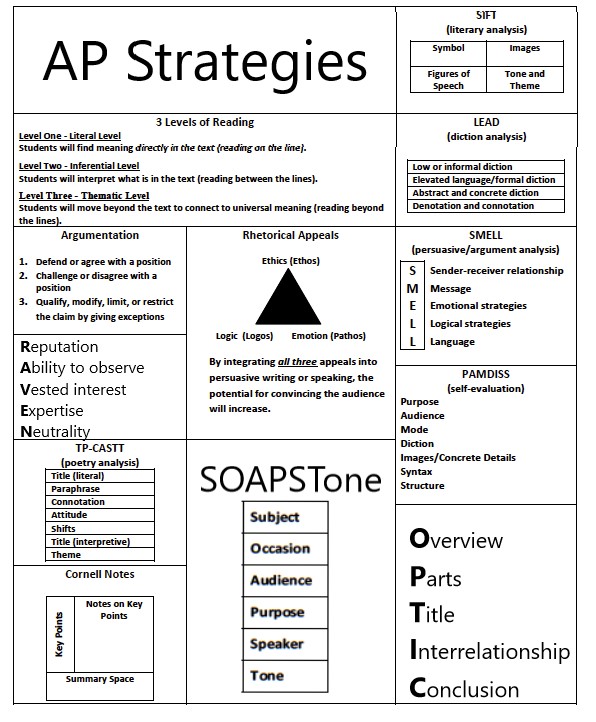
FIRST PReP ASSIGNMENT
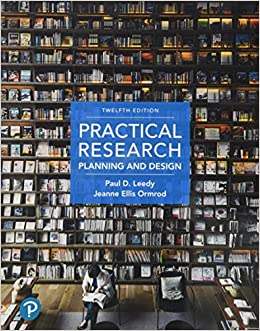
Initial PReP Assignment Reading
Initial PReP Assignment Information/Tasks
To begin the assignment, if you would like to add information and/or the responses to the assignment questions, you will need to make a copy of the document. Otherwise, you will need to create a new document to complete the tasks for this assignment.
This assignment will go into your PReP folder (shared with Mrs. Marcinkus) in your Google Drive.
_______________________________________________________________________________________________________________
“We must learn to live to live together as brothers or perish together as fools.” -Martin Luther King, Jr.
 Mrs. Marcinkus